











Prediabetes and type 2 diabetes: can you turn back time?
Does a prediabetes diagnosis mean that diabetes is inevitable?
And when type 2 diabetes is already established, can it really be "reversed"?
The answer is worth knowing: prediabetes can regress and type 2 diabetes can, in some people, go into remission (see references).
However, we prefer to speak of remission rather than cure or reversal of diabetes. Remission means that blood sugar has returned below the diagnostic threshold for diabetes for an extended period without medication to lower blood sugar. This does not mean that the disease can never reappear.
And above all, the earlier you act, the better.
What is prediabetes?
Prediabetes corresponds to several factors, including blood sugar levels that are higher than normal, but do not yet meet the diagnostic criteria for type 2 diabetes.
It is an important signal, but it is not inevitable.
At this stage, lifestyle changes can considerably reduce the risk of progressing to type 2 diabetes. In the famous Diabetes Prevention Program Study, an intensive lifestyle intervention reduced the incidence of type 2 diabetes by 58% in high-risk individuals.
This is why knowing your blood sugar and acting before the disease takes hold can make a considerable difference.
What are the signs of prediabetes?
This is precisely one of the pitfalls of prediabetes: most of the time, it causes no obvious symptoms.You can therefore live with high blood sugar for years without knowing it. When they appear, certain signs such as increased thirst, more frequent urges to urinate, unusual fatigue, or blurred vision may indicate that blood sugar is higher and deserve to be evaluated. An increasing waist circumference or abdominal weight gain are not symptoms of prediabetes, but can be associated with a higher metabolic risk. This is why a blood test - especially fasting blood sugar and HbA1c - remains much more reliable than our sensations to know where we stand.
Can type 2 diabetes be put into remission?
Yes, in some people.
Research in recent years has clearly shown that type 2 diabetes remission is possible, particularly when the intervention occurs relatively early in the course of the disease and a significant weight loss is achieved in overweight people (vsee references).
The international consensus generally defines remission as an HbA1c below 6.5% maintained for at least three months without blood sugar-lowering medication.
This still requires medical follow-up: even in remission, monitoring remains necessary since hyperglycemia can reappear.
How to act on your metabolic health?
There is no single food or supplement that can, on its own, reverse diabetes.
However, several levers used together can profoundly change our metabolic environment.
Fiber: start in the morning
Fiber is probably one of the simplest things to incorporate into your daily routine.
With a glass of water taken after fiber, they can help regulate bowel movements, feed the microbiota, promote satiety and, depending on their nature, slow down carbohydrate absorption, contribute to a more moderate glycemic response and help lower blood cholesterol.
Incorporating them in the morning simply allows you to start early in meeting our daily needs.
Protein at every meal
Protein contributes to satiety and above all allows us to preserve and develop our muscle mass.
Why is this so interesting for our metabolic health?
Because muscle is a major user of glucose. Muscle activity and maintaining good muscle mass therefore contribute to better metabolic management.
Fewer carbohydrates… or above all choosing them better?
It is not necessary to ban carbohydrates.
For some people with prediabetes or type 2 diabetes, reducing their quantity can help improve glycemic control. But their quality and the overall composition of the meal also matter.
Prioritizing foods rich in fiber and minimally processed, avoiding large amounts of simple sugarsand combining carbohydrates with protein, fiber, and healthy fats allows us to build meals that are much more favorable to metabolic health.
Walking after meals
Another extraordinarily accessible tool: walking after eating.
When our muscles work, they use more glucose. Light activity after a meal can thus help reduce the postprandial rise in blood sugar.
Even a short walk counts.
And in the longer term, moving regularly, developing muscle strength and reducing time spent sitting improve several components of metabolic health.
And Gluconig ?
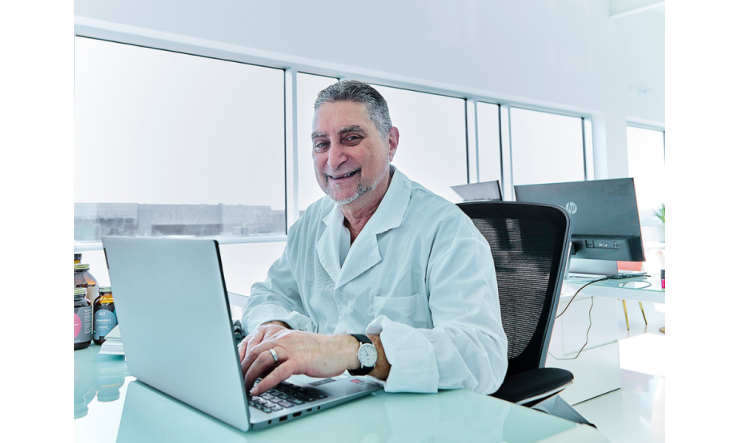
Gluconig was developed by researcher Pierre Haddad around two particularly interesting ingredients in the context of glucose metabolism: black seed and InSea2®, a polyphenol extract from brown algae.
Black seed has been the subject of clinical research on various glycemic markers (see references). InSea2® has notably been studied for its action on the enzymes responsible for digesting certain carbohydrates and on the metabolic response following their consumption (see references).
Gluconig can thus be used as a complementary tool, taken 30 minutes before a meal so that its ingredients can act during the digestion of the food consumed, notably by helping to reduce its glycemic index.
And this is particularly important when a person is already taking medication to control their blood sugar: the addition of a product intended to act on it should be discussed with a healthcare professional.
Acting before diagnosis
This is probably the most encouraging message of all.
Our metabolic trajectory is not necessarily set in stone.
Prediabetes can regress. Some people with type 2 diabetes can achieve remission. And long before either happens, we can already take care of our metabolic health.
More fiber. Enough protein. Quality carbohydrates suited to our needs. Muscle. Movement. A walk after meals.
Daily habits that can make a real difference to our metabolic health.
Can we lower our blood sugar naturally?
Yes, several habits can help improve natural blood sugar management, particularly in cases of prediabetes: eating enough fiber and protein, reducing added sugars and certain refined carbohydrates, choosing whole foods, exercising regularly, and walking after meals. Maintaining or building muscle mass also plays an important role, as it actively helps use glucose. These strategies can improve insulin sensitivity and blood sugar control, but do not replace treatment when it is necessary.
Article to read: Good and bad sugars: which to choose and which to avoid?
References :
- Recent type 2 diabetes diabetes: Remission is possible. Diabète Québec. https://www.le-diabete-dans-tous-ses-etats.precidiab.org/diabete-de-type-2/diabete-de-type-2-recent-la-remission-est-possible/ (accessed on September 3, 2026).
- Paradis ME, Couture P, Lamarche B. A randomised crossover placebo-controlled trial investigating the effect of brown seaweed (Ascophyllum nodosum and Fucus vesiculosus) on postchallenge plasma glucose and insulin levels in men and women. Appl Physiol Nutr Metab. 2011 Dec;36(6):913-919. doi: 10.1139/h11-115. Epub 2011 Nov 16. PMID: 22087795.
- Gabbia D, Dall'Acqua S, Di Gangi IM, Bogialli S, Caputi V, Albertoni L, Marsilio I, Paccagnella N, Carrara M, Giron MC, De Martin S. The Phytocomplex from Fucus vesiculosus and Ascophyllum nodosum Controls Postprandial Plasma Glucose Levels: An In Vitro and In Vivo Study in a Mouse Model of NASH. Mar Drugs. 2017 Feb 15;15(2):41. doi: 10.3390/md15020041. PMID: 28212301; PMCID: PMC5334621.
- Saadati S, Naseri K, Asbaghi O, Abhari K, Zhang P, Li HB, Gan RY. Nigella sativa supplementation improves cardiometabolic indicators in population with prediabetes and type 2 diabetes mellitus: A systematic review and meta- analysis of randomized controlled trials. Front Nutr. 2022 Aug 11;9:977756. doi: 10.3389/fnut.2022.977756. PMID: 36034891; PMCID: PMC9403837.
- Mahomoodally MF, Aumeeruddy MZ, Legoabe LJ, Montesano D, Zengin G. Nigella sativa L. and Its Active Compound Thymoquinone in the Clinical Management of Diabetes: A Systematic Review. Int J Mol Sci. 2022 Oct 11;23(20):12111. doi: 10.3390/ijms232012111. PMID: 36292966; PMCID: PMC9602931.