








They are found everywhere: perfumes, creams, shampoos, household products, laundry detergent, candles…
But what does the word "fragrance" on an ingredient list actually contain? And what is the difference between a synthetic fragrance and a fragrance composed exclusively of natural aromatic materials?
What is a synthetic fragrance?
A fragrance is a composition of different odorous molecules.
These can come from natural materials - essential oils, absolutes, resins, extracts - or be obtained by synthesis.
A synthetic molecule can reproduce a smell present in nature or create a note that does not exist as such in a natural material.
Synthetic does not automatically mean dangerous. And natural does not automatically mean risk-free.
This is an important distinction.
So, why do some people want to avoid synthetic fragrances?
Because a fragrance can be a complex composition and the consumer does not necessarily know each of the substances that compose it.
In Canada, the ingredients of a fragrance blend can generally be grouped under the single term "perfume" or "fragrance" on the label. The complete fragrance formula can include many ingredients and does not have to be fully detailed on the packaging.
Can fragrances cause allergies?
Yes, in some people.
Certain fragrant ingredients are known contact allergens and can cause a skin reaction in people who are sensitive to them.
And this reality concerns both certain natural and synthetic molecules.
Limonene, linalool, citral, geraniol, and eugenol, for example, can be naturally present in essential oils.
What about phthalates?
This is probably one of the reasons why synthetic fragrances have acquired a bad reputation.
Certain phthalates have historically been used in the world of perfumery, particularly as solvents or for certain technical properties.
But not all synthetic fragrances contain phthalates, and not all phthalates have the same toxicological profile.
It is therefore necessary to avoid the shortcut:
synthetic fragrance = phthalates = dangerous.
The scientific reality is much more nuanced.
What one can choose, however, as a consumer or as a manufacturer, is to demand greater transparency and voluntarily remove certain substances from their formulations.
Does natural automatically mean better?
An essential oil is an extraordinarily complex material that can naturally contain dozens, or even hundreds, of molecules.
Some also require precautions for use.
The fundamental difference is therefore not that "nature is harmless and synthesis is dangerous".
The difference is in the choice we make about what we want to wear and breathe.
Why did Maison Jacynthe choose 100% natural perfumery?
A different choice: no synthetic fragrance.
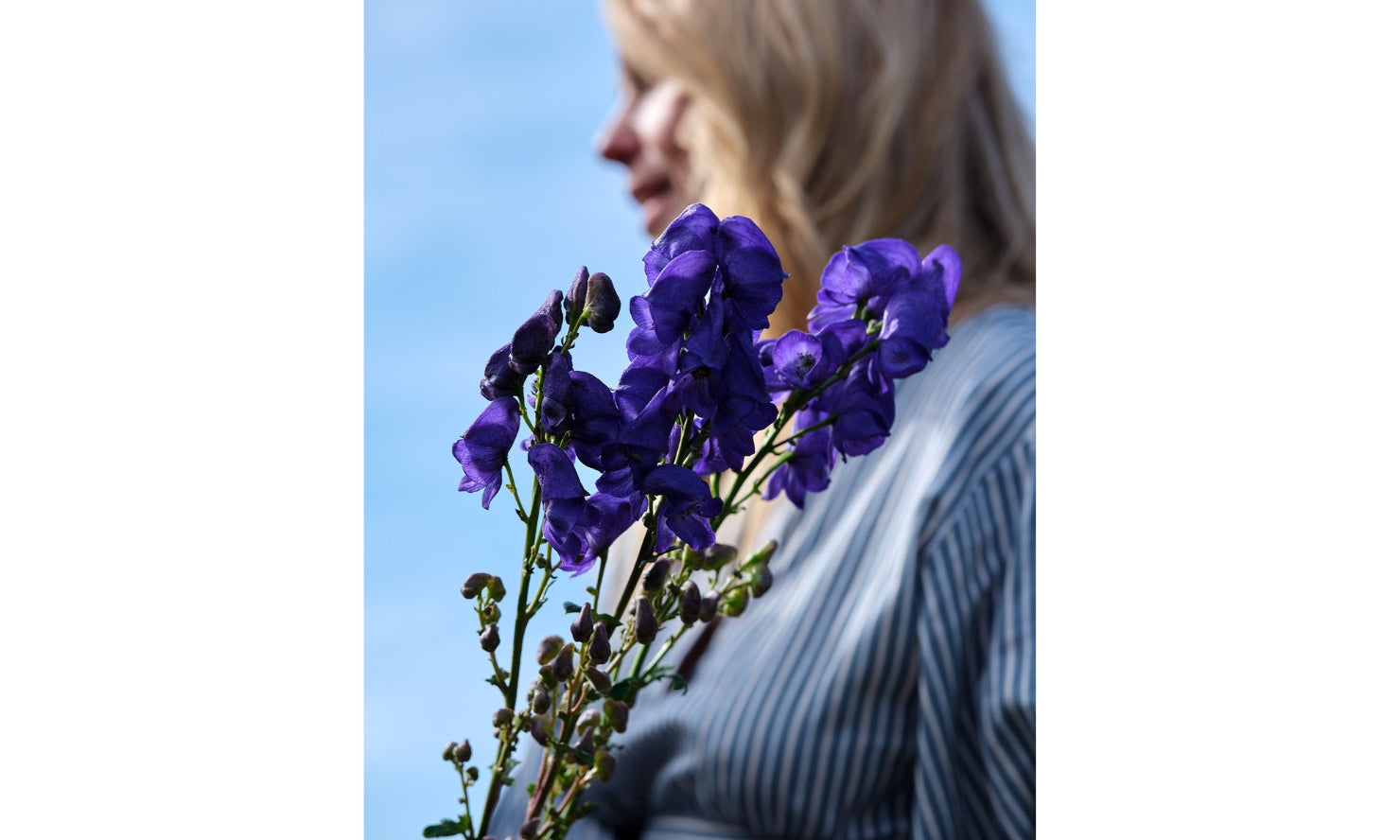
Our perfumes are built from true natural aromatic materials: essential oils, absolutes, resins, and precious extracts.
Rose, jasmine, neroli, bergamot, sandalwood, frankincense, vanilla, tonka bean…
These materials do not simply seek to reproduce nature; they are nature.
A natural rose is not a single odorous molecule. It is an extraordinarily complex architecture of aromatic constituents that, together, create its depth, its nuances, and its evolution on the skin.
It is precisely this complexity that fascinates us.
Does this change how a fragrance evolves?
Yes.
Natural materials can vary slightly depending on harvests, terroirs, and climatic conditions.
And they live on the skin.
A bergamot essential oil does not tell exactly the same story as a jasmine absolute. A Damask rose does not have the same relief as a centifolia rose. Sandalwood brings yet another depth.
It is a perfumery that is discovered gradually rather than a perfectly uniform scent.
A living fragrance.
Can one be allergic to a 100% natural fragrance?
Yes.
And it's important to say that.
A person allergic or sensitive to a molecule naturally present in an essential oil can react to a natural fragrance.
100% natural does not therefore mean 100% hypoallergenic.
What it means at Maison Jacynthe is much simpler: we have chosen to create our fragrances exclusively from natural aromatic materials, without synthetic fragrances.
So, should we be afraid of synthetic fragrances?
No.
The goal is not to be afraid of perfume. It is to know what you are choosing.
An ingredient is not dangerous simply because it is synthetic, just as an ingredient is not automatically risk-free because it comes from nature. Concentrations, exposure, individual sensitivity, and the precise nature of the substances matter. Industry standards can also prohibit or limit certain fragrance materials depending on their safety profile.
At Maison Jacynthe, our choice is that of 100% natural high perfumery, out of love for true materials.
Because a rose can be a rose.
A jasmine, a jasmine.
A sandalwood, a sandalwood.
And because when you discover what these materials can create together, you understand why no imitation tells this story.