








My approach to biohacking aims to naturally optimize energy, clarity, longevity, and vitality.
It is based on a synergy of daily practices, ancestral wellness rituals, and targeted nutrients, always with a focus on cellular performance, balance, and inner beauty.
Physical practices and rituals
Sauna: thermal stimulation
Cold bath: activation of muscle tone and physical resilience
HIIT (including EMOM and AMRAP): short, intense workouts that promote power and endurance
Strength training and jumping: maintenance of strength and muscle density
Dry brushing: skin vitality and circulatory stimulation ritual
Oil pulling: natural oral hygiene integrated into the morning routine
Natural tools and technologies
Hydrogen water: support of vitality and oxidative comfort
Hot/cold contrast breathing: integrated as natural levers for adaptation and refocusing.
Exposure to morning light
Supplements and bioactive nutrients
NMN: molecule associated with cellular performance and longevity, a NAD precursor
Health support: with plant-based antioxidants from grapes and olives, among others
CoQ10: natural energy cofactor
Creatine : support of muscle and cognitive energy
Omega, collagen & hyaluronic acid: integrated into my beauty-health ritual
Mushrooms & adaptogens (lion’s mane, reishi, etc.): adaptation/detachment from stress
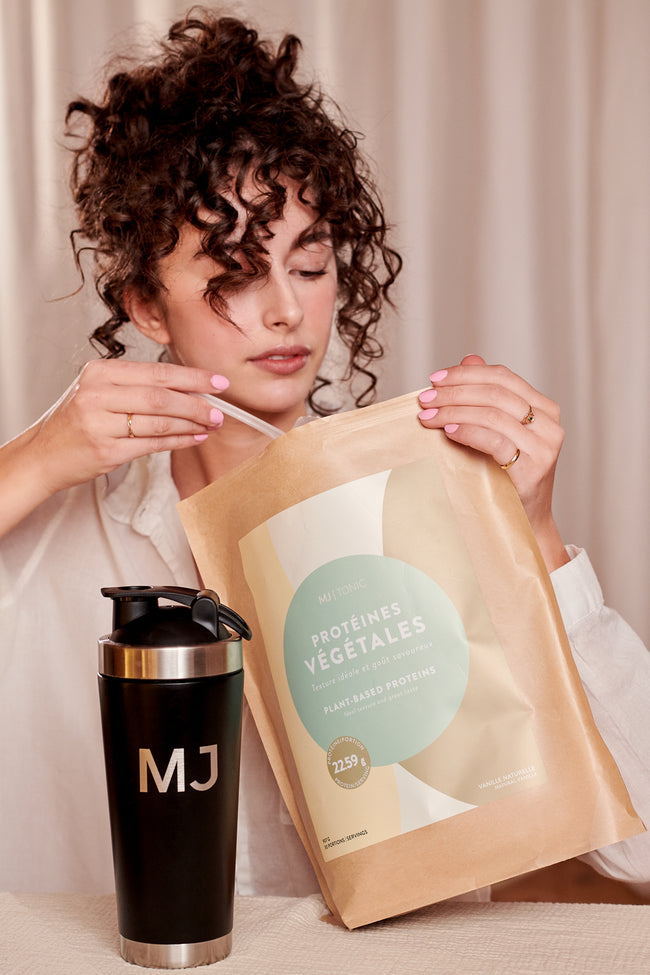
Greens & plant proteins: for nutritional balance and daily vitality
My biohacking is based on a keen listening to the body and a coherence between nature, science, and beauty.
Each practice — from the cold bath to collagen — is part of a quest for lasting energy, emotional balance, and overall well-being, without extremes, but with consistency and awareness.
Concretely, in a day
Biohacking aims to optimize the functioning of the body and brain using natural, nutritional, or technological strategies.
Longevity ritual
I draw inspiration from biohacking in my own way: without gadgets or excesses, with balance tools & above all, through the "science" of feeling (which combines intuition, observation of my body & listening to my body).
I bring together the best of biohacking and ancestral rituals.
In an intuitive approach to longevity, each practice – from the cold bath to dry brushing – becomes a celebration: beauty, clarity, and energy are the natural consequence of a vibrant & aligned body.
In my case, sauna, cold bath, NMN, specific antioxidants/polyphenols, CoQ10, adaptogens, hydrogen water, and creatine reinforce:
- mitochondrial vitality (like NMN);
- physical performance;
- and mental resilience.
What directly falls under biohacking
Tools used to optimize performance, longevity, and cellular regeneration:
Sauna (infrared or traditional)1:
- Stimulates growth hormone production2
- Activates heat shock proteins (HSP)3
Cold bath (cold plunge, cryotherapy)4:
- Improves resilience and recovery.5-6
HIIT (High Intensity Interval Training)*:
- Improves insulin sensitivity.7-8
- Improves mitochondrial health and cellular energy production.9
NMN, a pillar of biohacking :
- A NAD+ precursor, it acts on DNA repair, energy production, and cellular longevity.10-11
Polyphenols :
- Activate sirtuins (longevity proteins)12-13-14
- Protect mitochondria and fight oxidation14
CoQ10 (Coenzyme Q10) :
- Essential for mitochondrial energy production, often combined with NMN in anti-aging and performance protocols.15-16
Creatine:
Improves cellular energy production (ATP), which directly affects the overall performance of the body and brain.17
Hydrogen water = cellular regeneration biohack, improves cellular recovery, supports mental clarity and vitality, improves well-being18
Adjacent (inspired by biohacking, but more “ancestral” )
Oil Pulling : part of natural detoxification and oral health from Ayurveda.
More and more biohackers are integrating it into their “ancestral + modern science” routines.
Dry brushing : activates lymphatic circulation, exfoliates & “oxygenates” the skin (skin gymnastics).
Exposure to morning light: synchronizes the circadian rhythm, regulates cortisol, and improves sleep.
“Morning light before screen light.”
Conscious breathing: improves cellular oxygenation, calms the nervous system, and amplifies the effects of the cold bath.
Light or natural intermittent fasting (starting from 14 hours without caloric intake): optimizes cellular regeneration (autophagy) and insulin sensitivity — to be integrated without rigidity, as a return to the natural rhythm.
Electrolyte hydration: Pure water + a pinch of sea salt or electrolytes: better hydration therefore cellular absorption, stable energy.
Mushrooms & adaptogens (reishi, lion’s mane, cordyceps): support concentration, vitality, and neuronal longevity.
Grounding: grounding, stress reduction, energy recharge — a discreet pillar of gentle biohacking.
*HIIT (EMOM & AMRAP):
- optimize performance and metabolic longevity
- stimulate mitochondrial metabolism (energy production)
- improve tolerance to physiological stress
- regulate insulin sensitivity
Strength training and jumping practiced in a logic of cellular and hormonal optimization
Strength training (strength training), a fundamental biohack:
- Stimulates the natural production of growth hormone.
- Protects bone density.
- Strengthening muscle means strengthening longevity.
Jumping:
- Activates lymphatic circulation (like dry brushing, but through movement).
- Improves posture and bone density.
- Awakens the nervous system and overall vitality.
Scientific explanations
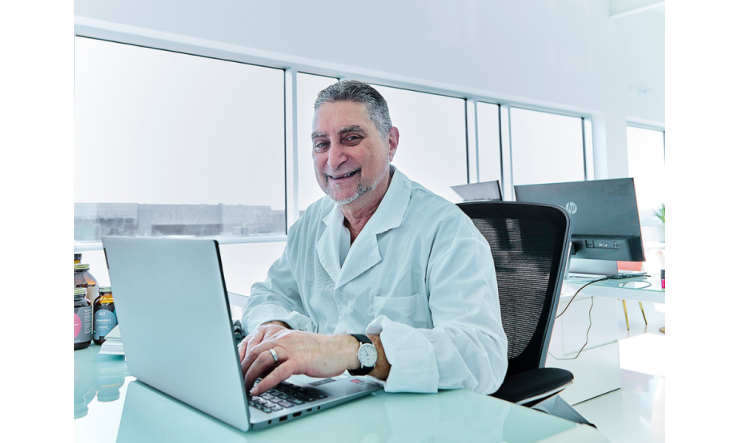
- The conference with Jean-Yves Dionne and Pierre Haddad
- Jean-Yves Dionne's basic kit
- NMN, by Pierre Haddad, scientific researcher and doctor in pharmacology
- Table of indications compared to supplements - for informational purposes only
- Coenzyme Q10
- Scientific studies on Health support
References
- Laukkanen, T., Kunutsor, S. K., Zaccardi, F., & Laukkanen, J. A. (2018). Sauna bathing is associated with reduced cardiovascular mortality and improves risk prediction in men and women: a prospective cohort study. Mayo Clinic Proceedings. PubMed
- Kukkonen-Harjula, K., Oja, P., Laustiola, K., Vuori, I., Jolkkonen, J., Siitonen, S., & Vapaatalo, H. (1989). Haemodynamic and hormonal responses to heat exposure in a Finnish sauna bath. European Journal of Applied Physiology and Occupational Physiology, 58(5), 543-550. PubMed
- Tei, C., Imoto, Y., Kimura, K., et al. (2010). Effect of Waon therapy on oxidative stress in chronic heart failure.Circulation Journal, 75(2), 348-356. (Study conducted on hamsters, not on humans.) PubMed
- Cain, T., Brinsley, J., Bennett, H., Nelson, M., Maher, C., & Singh, B. (2025). Effects of cold-water immersion on health and wellbeing: A systematic review and meta-analysis PubMed
- Wang, H., Wang, L., & Pan, Y. (2025). Impact of different doses of cold water immersion (duration and temperature variations) on recovery from acute exercise-induced muscle damage: a network meta-analysis. Frontiers in Physiology, 16.PubMed
- Moore, E., Fuller, J. T., Buckley, J. D., Saunders, S., Halson, S. L., Broatch, J. R., & Bellenger, C. R. (2022). Impact of cold-water immersion compared with passive recovery following a single bout of strenuous exercise on athletic performance in physically active participants: a systematic review with meta-analysis and meta-regression. Sports Medicine, 52(7), 1667–1688. PubMed
- Jelleyman, C., Yates, T., O’Donovan, G., Gray, L. J., King, J. A., Khunti, K., & Davies, M. J. (2015). The effects of high-intensity interval training on glucose regulation and insulin resistance: a meta-analysis. Obesity Reviews, 16(11), 942-961. PubMed
- Mensberg, P., Frandsen, C., Carl, C. S., Espersen, E., Leineweber, T., Larsen, E. L., Storgaard, H., Schlawitz, K., Petersen, T. H. D., Poulsen, J. N., Sørensen, F., Gørtz, P. M., Forman, J. L., Kiens, B., Knop, F. K., & Vilsbøll, T. (2025, March 27). High-intensity interval training improves insulin sensitivity in individuals with prediabetes. European Journal of Endocrinology, 192(4), 456-465. PubMed
- Mahatme, S., Vaishali, K., Kumar, N., Rao, V., Kovela, R. K., & Sinha, M. K. (2022). Impact of high-intensity interval training on cardio-metabolic health outcomes and mitochondrial function in older adults: a review. European Journal of Applied Physiology. PubMed
- Rahman, S. U., Qadeer, A., & Wu, Z. (2024). Role and potential mechanisms of nicotinamide mononucleotide (NMN) in aging. Aging and Disease, 15(2), 565-583. PubMed
- Soma, M., & Lalam, S. K. (2022). The role of nicotinamide mononucleotide (NMN) in anti-aging, longevity, and its potential for treating chronic conditions. Molecular Biology Reports, 49(10), 9737-9748. PubMed
- García-Martínez, B. I., Ruiz-Ramos, M., Pedraza-Chaverri, J., Santiago-Osorio, E., & Mendoza-Núñez, V. M. (2023). Effect of Resveratrol on Markers of Oxidative Stress and Sirtuin 1 in Elderly Adults with Type 2 Diabetes. International Journal of Molecular Sciences, 24(8), 7422. PubMed
- Howitz, K. T., Bitterman, K. J., Cohen, H. Y., Lamming, D. W., Lavu, S., Wood, J. G., Zipkin, R. E., Chung, P., Kisielewski, A., Zhang, L., Scherer, B., & Sinclair, D. A. (2003, August 24). Small molecule activators of sirtuins extend Saccharomyces cerevisiae lifespan. Nature, 425(6954), 191-196.
- Alcaín, F. J., & Villalba, J. M. (2009). Sirtuin activators. Expert Opinion on Therapeutic Patents, 19(4), 403-414. PubMed
- Mantle, D., Hargreaves, I., & Mantle, J. (2021). The Use of Coenzyme Q10 in Cardiovascular Diseases. Antioxidants, 10(5), 755.
- Littarru, G. P., & Tiano, L. (2005). Clinical aspects of coenzyme Q10: an update. Current Opinion in Clinical Nutrition and Metabolic Care, 8(6), 641-646. PubMed
- Sandkühler, J. F., Kersting, X., Faust, A., Königs, E. K., Altman, G., Ettinger, U., Lux, S., Philipsen, A., Müller, H., & Brauner, J. (2023). The effects of creatine supplementation on cognitive performance: a randomized controlled study.BMC Medicine, 21(1), 406. PubMed
- Sládečková, B., Botek, M., Krejčí, J., Valenta, M., McKune, A., Neuls, F., & Klimešová, I. (2024). Hydrogen-rich water supplementation promotes muscle recovery after two strenuous training sessions performed on the same day in elite fin swimmers: randomized, double-blind, placebo-controlled, crossover trial. Frontiers in Physiology, 15. PubMed





Leave a comment